


What to bring to an Night vision class

Updated: Dec 2, 2025
What to bring to an Night vision class, tips, and how to prepare.
hey what's up guys so today let's talk
about what to bring for a night vision
class right like a lot of people just
don't know what to bring and a lot of
people just don't know how like what to
expect if there's it's their first night
vision class and I'll tell you this from
uh from my experience going to multiple
night vision classes uh myself and also
I teach them so it makes sense that I
would have an idea of what to bring and
stuff so let's kind of go through a few
things
um I know I put a requirements list on
my website and we'll kind of go through
them and kind of talk about each of them
so first thing I put on there is some
kind of helmet mounted night vision that
is Gen 2 or better
now the reason I say Gen 2 are better
because photonis is technically Gen 2
night vision and I don't want to
Discount those dudes because you can
still see with that night vision and it
works really well now
the downside to it is it needs more
illumination most of the time or
depending on specs to him uh it may be a
little too dark because of their ebi or
something like that but that's a
question to kind of go over to the
silent Solutions patreon Channel and
look up what ebi is and he'll help you
out with those kind of things now helmet
mountain night vision pretty simple now
it doesn't matter what kind of helmet
you bring to class I don't care if you
have a Chinese helmet you got a bump
Helmet or whatever you don't need a
ballistic helmet you don't need the most
expensive helmet you need something that
holds your night vision sturdy and and
keeps it on your head where you can see
that's really what matters now
if you want to go out and get more stuff
or get uh better helmets or better
accoutrement for your helmet rock on man
that's your prerogative that's based off
your budget but realistically like
that's all you need you need some kind
of helmet to hold your night vision or
some kind of skull crusher to hold your
night vision that you can not be messing
with the whole entire night or really
just bothering you the entire night
because remember this thing is
kind of supposed to be on your head for
a little over eight hours and you're
going to start feeling the strain of it
over and over and if you got to keep
taking it off because you're starting to
feel a strain you may be suffering a
little bit from fatigue and that fatigue
is obviously going to start affecting
how much you're learning because you're
not going to be paying attention now
something I suggest if you have your
system already set up and you're not
like renting something from me
um wear it around the house a little bit
right the whole week prior week two
weeks prior get used to it being around
on your head walking around and feeling
what that weight feels like and it can
only be like I don't know 30 minutes to
an hour a day or something walking
around doing [ __ ] throughout the
house and you can get used to it and not
have the The Strain and all those
muscles being fatigued very quickly you
can start to build them up a little bit
just like any other muscle they need
exercise they need to be worked a little
bit to help you out so recommend that
when it comes to your helmet now the
other thing that comes with your helmet
is making sure that you can wear earpro
under on or just foamies with your
helmet it doesn't matter which ones you
choose but if you're a fan of electronic
hearing protection which I am especially
in a class setting where I may be
talking
um and you guys may need to listen or
other people may be talking to you and
you may want to listen to them
I suggest electronic hearing protection
but if you can't Mount them to your
helmet it's okay all you have to do is
set up your pads on the inside to give
you a channel where you can actually
wear your helmet over your ear Pro it's
kind of cool also kind of the way that I
used to do it back in the Army too so
just an option there
um and and is something that you want to
think about is how am I going to wear
ear Pro while I wear my helmet some
people don't realize that and then they
get to class and they're like ah son of
a bee and then they have to borrow
foamies from me
um so that now the other thing too on
your helmet or at least bringing to
class is some form of a headlamp let me
pull mine out
all right some kind of headlamp I highly
recommend one it's super useful to go
hands off because you do not use your
rifle light to like illuminate the
target to see what your bullet holes
look like and to Mark Mark targets a
super unprofessional it's unsafe you're
not using it in the manner it's supposed
to be used
this is what that's for a lot of times
I'll route this over my neck and all I
got to do is just turn it on and I can
see the target I can see my notebook I
can take ample amounts of notes in the
dark with some kind of headlamp
highly recommend it for administrative
stuff like that
um and in they're relatively inexpensive
and they can help you with a ton of
different things like if you're working
on your workbench you're kind of
Smashing on [ __ ] you may need some extra
light use a headlamp so just other
options there but recommend some kind of
admin light you can use a pistol light
on there and like angle it if you're
using the right pistol light you could
also use some form of a Princeton Tech
or something and angle that bad boy how
you want but
those all cost way more money than a
simple headlamp from Walmart
so that's the helmet stuff right now
looking at it further right we have on
here eyes and ears right we talked about
ears already but eyes uh it is mandatory
in almost every night vision class I've
ever been to
um that's run by professional that you
wear ipro
um your night vision is not eye
protection it only covers freaking small
amount of your face and your eyes and
easily if you guys are shooting steel
you can get rounds thrown right through
the sides of those bad boys highly
recommend some good eye protection clear
eye protection to top it all off now I
prefer M frames and
and Frames give me good air flow between
the sides so that it's not being blocked
by a frame of some sort so if you wear a
framed version of Clear Eye Pro just
realize that full frame I mean you're
going to start blocking airflow and
start keeping that heat within the eye
Pro a little bit causes fogging a little
so keeping them clear and open for the
most part or keeping an open frame style
night or eye protection will help you
out the other thing is making sure you
defog those bad boys and use some kind
of anti-fog on it whether it's wipes
like these kind of wipes or it's some
form of cat crap or the Breakthrough
anti-fog or anything like that all of
them help none of them are going to
prevent things for 100 of the time but
it'll it'll definitely help compared to
not being treated
all right so that's eyes and ear
protection
um going down right a zeroed rifle all
right
um and and some of you guys are probably
laughing like why do I have to say that
why does he have to say that but the
amount of people that come to class
without a zeroed rifle is uh pretty
large right like think about how much
time you're spending zeroing your rifle
now wasting the time of other students
now I know it's part of the whole
process of learning and stuff but if
you're coming to a night vision class I
assume you've shot your rifle before and
learned how to use your rifle and you
should have been at least now if you
don't know how to zero it that's a
problem now if you know how to zero it
and you just flew in and you just
haven't had a chance let me know email
me and let me know and I'll get to the
range early right I will get to the
range early to be there with you to go
ahead and zero your rifle with you
because that's how much I give a [ __ ]
right I give a [ __ ] so so I want you you
guys have zero rifles because it makes
zeroing lasers hell of a lot easier at
least getting them close so that we can
work through class all right so making
sure you have a zeroed rifle and to the
ammo that you're shooting too right if
you're zero to some other ammo like
we're obviously going to have issues or
if you come with a Skittles pack of
ammunition it's like this brand this
brand there's like 17 brands in there
that's also a problem we're not going to
zero a rifle to that that ammo because
you can't zero rifle to at a at a decent
distance to that kind of ammo because
it's too sporadic right it's none of
them are the same
now um going further if you have an
Aiming laser which you should of some
sort it would be nice if it was zeroed
and then we just confirm that'd be sweet
but I teach you guys how to zero we talk
about zeros for lasers because it is a
night vision class and that's what it's
about now something to talk about with
Optics and lasers
when mounting any of these tools right
it is mandatory and I I say mandatory
because it's the smart way to do it when
you put it on the rail before you
tighten it down push it forward towards
the muzzle right in the pick rail
because you'll notice they wiggle right
they'll wiggle around in the rail you
have to push it forward and then tighten
it down remember energy is going
backwards when the gun's fired energy
comes back forwards while it settles
after recoil so that optic or that laser
will shift forward each shot until you
don't have a zero anymore so make sure
you set it there that way when recoil is
happening it settles at the point that
it's already zeroed and we're good so it
doesn't wiggle out of that spot all
right so when it comes to zeroing or
mounting your lasers or uh Optics
now going further right one of the
things I put on there is an optic
equipped handgun if you have a red dot
on a handgun that is preferred if you do
not we you can work around it right
there are ways of shooting knight uh
under night vision with iron sights with
iron sights that are tritium or even
fibers right sometimes it's just hey we
just got to go to White Light that's an
option or hey we have to use a focus cap
or something like that so I teach a
bunch of different techniques I've done
a bunch of ways to do it and we test it
out we see where your limitations are if
we can and then uh and then from there
you guys learn further but uh but red
dots are preferred by far it's much
easier it's much well in the grand
scheme of things it just works with our
anatomy and our eyes and how the eyes
work way better
so further down
um mags right I usually ask for at least
three mags for pistol and for rifle it's
not a huge thing we don't need that many
more but three mags at least and being
able to carry at least three mags on you
one in the rifle two in your pocket
don't matter you don't need a cool belt
you don't need a chest rig you don't
need kit all that stuff for the most
part when learning actually starts to
hinder people because they're like oh
shifting around with it now if it's the
comfortable thing that you've been using
for a long time that's what you want to
use rock on girl as long as it hinders
you zero percent right so make sure it
doesn't become a problem that way you're
not paying attention in class because
you're busy tightening something okay
now here's here's two very well let's
say three very very important ones
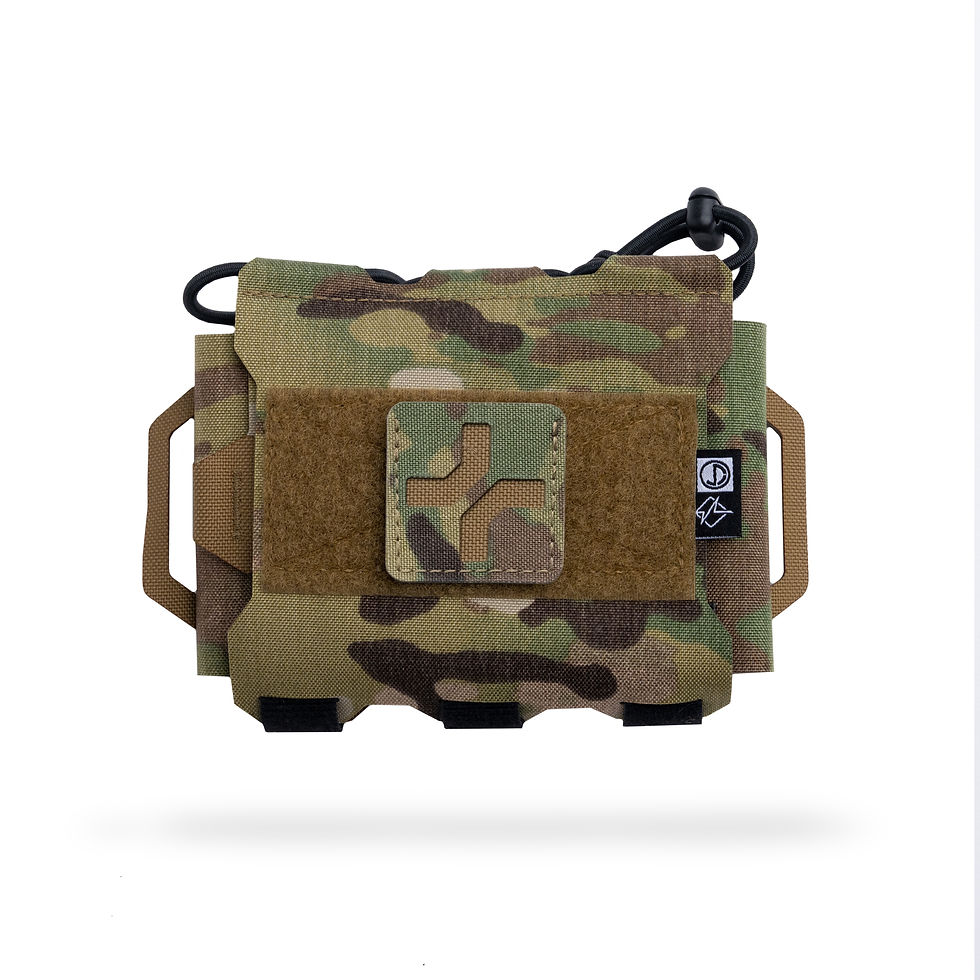
one is some form of a personal medkit
right uh not to say I don't bring one I
bring one for the class I bring one for
myself but everybody should have one of
some sort on them uh mandatory man in
class it is super important to have
something like that making sure that you
have what is needed uh for yourself and
make sure it's stuff that you want me
using on you like think about that right
if it's some Wazoo Shenanigans you just
put like 13 tampons in there I'm not
going to use them right I'm going to use
my own stuff but like that that was your
life saving equipment bro like don't be
a cheap ass when it comes to that you
bought whatever thousand dollar night
vision you set up your rifle with
whatever thousands of dollars of [ __ ]
you can buy a couple hundred dollars
worth of Med gear that will be probably
more useful than both of these combined
so just something to think about don't
don't [ __ ] cheap out on yourself
because that's what you plan on using on
you come on man so Med gear
second one notebook very important bring
some kind of a notebook whether it's a
right in the rain or it's you know a
couple index cards clipped together I
don't care like as long as it's a
notebook of some sort that you can take
notes on because so many people ask me
for a handout out after class they're
like hey man it would be nice if you
gave a handout no I'm not going to give
you a handout the class changes too much
because I'm constantly evolving it also
no you should be taking your own notes
your own [ __ ] notes this isn't high
school man take your own notes and
really
take the time to write them so that you
can you can digest it later so something
big and then black markers right some
kind of Sharpie of some sort to mark
your targets we are or I am at least
very heavy on accuracy standards and
keeping a shooter even under night
vision accurate usually we don't use
anything bigger than a five and a half
inch circle right on the Target right we
use B8 for the most part or B8 size
holes or circles and stuff and that's
because I am a huge fan of keeping
people more honest with their accuracy
you will Mark out all your outs we will
see them all all of us will walk around
and see each other's targets it is
constant and if that makes you scared
man that may be something you need to
look at in your own training all right
if you're nervous about shooting small
targets like
what are you doing on your own practice
time all right if you're shooting
ginormous V tax or something you may be
missing out on the the process of
learning because you're you're giving
yourself too big of a target for
like
training man small targets for training
big targets for real right that's what
we get so it's it works out nicely so
it's the whole aim small Miss small kind
of thing or it's really just aim small
right shoot small
get big in real life
so
going further right we have some um
additional things that are kind of not
required well semi required so we'll
call it uh somewhat required but mostly
just additional items so first one is uh
batteries right spare batteries super
important right you got to have
batteries for all your equipment very
important that you know and you have
them for all your Optics your your night
vision obviously your lights your lasers
your ear Pro all those little things
that you need lights for or I'm sorry
batteries for and some kind of
um powering of that unit you should have
batteries for it now if you don't you
forgot them or something it's no big
deal most likely I'll have some but
come on be prepared
um next next thing
knee pads right sometimes we take knees
on things or we get lower on on the on
the ground and shoot like if you need
knee pads man you know your knees I
highly recommend it it's not going to be
an all-day Affair but sometimes we do so
it may be something you may want to
bring just in case uh spare Firearms if
you have them it's always nice to bring
a sparrow in just in case something
happens you could just instead of trying
to figure it out and stuff you just swap
guns and figure that [ __ ] out later when
there's light outside and you have more
time
um snacks and food
recommend it man we don't take breaks in
my class in the sense of like a lunch
break or a dinner break there's no
hour-long hour and a half long whatever
there's even a half hour long one
um the only time I usually do one is for
classroom stuff uh if there's some kind
of small classroom thing I want to do
bring your snacky poos and you can sit
down and eat and stuff but other than
that most of my night vision classes
don't have that so we are doing you are
eating on the go and it's a it's a
rolling dinner if you want to call it
that right or a working dinner
now
a couple other things a cleaning kit
obviously extra oil that that should be
a standard for anything that you bring
when it comes to shooting you should
have the things that you need to clean
and maintain your rifles and then uh and
then obviously the the attire you wear
for
um wet weather cold weather or hot
weather is very very important so think
about this right cold weather
I need some kind of layers you need some
kind of gloves you need to be able to
like maintain so that you don't freeze
your ass off and then not be paying
attention to what you invested money
into learning and invested money into
having so making sure you take care of
that as well right take care of yourself
if you don't know how to layer email me
man I had somebody I email me about a
class in a couple weeks and he was like
hey what should I wear it says it's
gonna be cold I'm like well I wear this
on my top my bottom my shoes right like
make sure I I take care of things like
that and uh and we can go over that in
different video as well
hot weather obviously you want to be on
more looser clothing and lighter
clothing that way you can kind of like
breathe and let your body breathe
hydrating is super important in either
weather condition
um and then
what you'll find you'll fog up in both
conditions depending on how much your or
how extreme you go in each Direction so
the hotter it is obviously you're going
to be sweating your body heat is going
to radiate onto the cool lenses that are
on your
um night vision may want to make sure
you take care of that obviously with
bringing a little raggy rag or or some
kind of anti-fog Prior or both and then
from there on the cold weather nights
your condensation coming out of your
mouth right all of the the the puff of
air that you can see that condensation
is going to get on everything it's going
to moisten the the actual lenses can
cause condensation as well so you want
to make sure you pay attention to those
two things in those two different
environments and if it's hot and then
starts raining it's going to cool down
really quick you're going to see
condensation different or temperature
differences in your night vision your
eye Pro things like that and then the
same thing the opposite way if it's cold
and then it starts raining it's going to
heat up a little bit and then it'll cool
down afterwards and you may want to
really take care of yourself because
that's probably the most miserable one
so Pro tip
bring Gore-Tex boots for almost any
night vision class right bring some form
of rain gear right some some kind of
rain jacket that's non-uh permeable
right it doesn't let in anything that
way you always have a wind layer or you
always have some kind of rain layer and
then obviously
on the cold days you want to make sure
you bring a bunch of layers long sleeve
shirt waffle top mid layer some kind of
insulation layer or whatever it is and
then some kind of top that you can wear
that'll keep you warmish
um just realize like there's a lot of
people that froze to death not death
they froze really bad in like South
Carolina recently when I was up there
for the night op Summit and because they
didn't dress appropriately my Floridian
tropical ass dressed appropriately I
would suggest also hot hands right some
kind of warmy hand things
um make sure you bring them I would
bring an extra pair of socks so you can
change them when you start feeling like
too cold on your feetsies because that
means they're probably wet from moving
around right sweating the cold air makes
them colder right they're not going to
dissipate so change your socks and then
now they're warming up let your other
socks dry out really really easy to keep
swapping if you wanted or just I mean
you won't need a swap again most likely
until you go home and uh and need to go
to sleep and get up and do it again so
for night vision class like that's
essentially how I do it
um it's nothing way out of the norm when
it comes to a normal class but because
it's in the dark because it is in
different uh like State of Mind for most
people right their exhaustion they're
just like that people like get tired
around 10 30 11 and then and we're going
into one or two in the morning sometimes
and they're fading fast so if you need
to go to bed late then the first night
get up late the the first morning or the
next morning if you can I'd recommend it
man get kind of used to that time frame
a little bit so you can get used to
playing in that in that game in that
night or just suffer out and drink some
caffeine you know like figure it out
that way uh but be careful take care of
your bodies kind of thing
um after classes
this is something that a lot of people
don't know or pay attention to but
afterwards you'll notice there's
condensation usually all over your
equipment uh whether it's cold night or
a hot night it's usually wet because we
get to that point in the dark make sure
not to put your night vision into a
Pelican case don't put your rifle into a
Pelican case and leave it like that all
night if you get back to your hotel room
pop them open let them air out I usually
open up my battery cap for my my night
vision so that it can it can also be
fresh without the battery in there and
kind of air out my helmet ear Pro goes
somewhat like this so that it lets them
air out if you have air pro
like so-ish right some some muff style
ear Pro that you were wearing go ahead
and rotate the pads
right outward so they sit like this all
night so the pads can just kind of
breathe right and then
uh to top it all off I like to keep my
helmet upside down so that my my pad
system underneath inside can kind of air
out and dry off as well
um take your insoles out of your shoes
right things like that you have to take
care of your stuff otherwise you're
going to suffer the next night or just
your shit's going to get rusty and bad
and [ __ ] I always squirt some lube
in my bolt so that my bolt has some lube
after being shot that much after class
and any any class and then let it go if
it's crusty in the morning I may pull
the bolt out wipe her down really good
and throw her back in lubed so sometimes
that's the need as well so it just
depends for example first night of night
op Summit when I sent my bolt home after
reloads it would kind of sluggishly move
forward and and get into battery and I
was like that felt funny it felt yucky
like dirty and sluggish so the next
morning woke up nice bright and early
and had a little bit of breakfast and
then went right to it right cleaning up
my bolt cleaning up my inside of my
upper receiver some of my low receivers
some of my chamber and then lubed it
back up threw it back in and then shot
the rest of the next two nights
flawlessly right so
recommend it man if you shoot your guns
enough you know when they start feeling
yucky and you need to fix them so just
do it man it's not a big deal
um but yeah so if there's any questions
about this guys let me know
um like I said this is mainly for my
class but it would probably work for the
majority of night vision classes out
there
all right guys so I hope this helps guys
take care









Comments